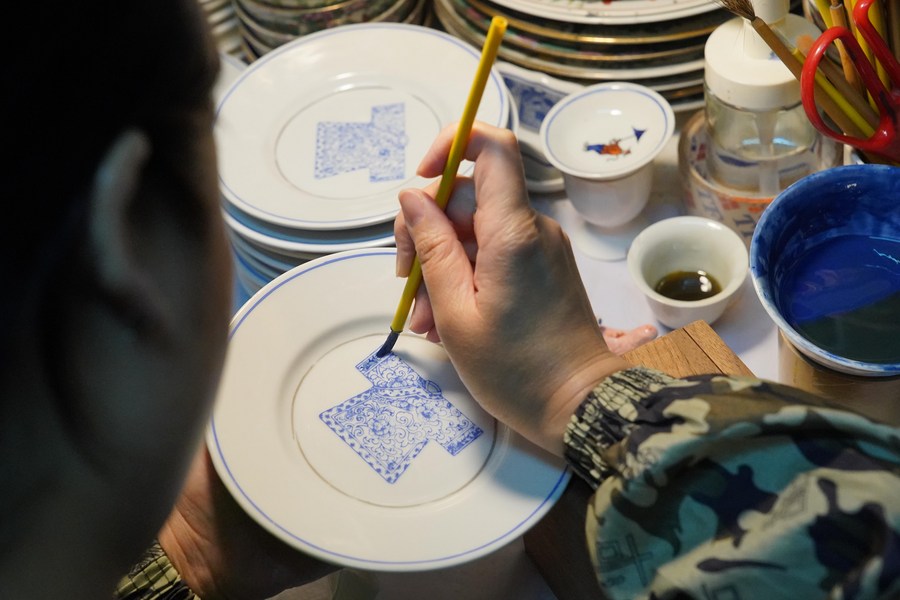
Guangcai Porcelain
Introduction
Guangcai porcelain, a gold polychrome glazed porcelain, is a distinguished craftwork originating from Guangzhou, the capital of Guangdong province. This traditional art form represents the city's rich cultural heritage, which has been shaped by over 4,000 years of history and centuries of foreign trade. The craft combines the essence of Eastern and Western cultures, showcasing the unique artistry and innovation of Guangzhou's design masters. Guangcai porcelain is characterized by its intricate designs, vibrant colors, and luxurious appearance, making it a notable export product and a symbol of cultural exchange.
History
The origins of Guangcai porcelain can be traced back to the Kangxi period during the Qing Dynasty (1644-1911). Influenced by the Jingdezhen style of painting and the use of enamel on copper, Guangzhou craftsmen developed this unique craft by painting and firing white porcelain bodies transported from Jingdezhen. The delicate enamel goods became highly sought after during China's booming maritime trade in the Qing Dynasty, showcasing the charm of Cantonese craftsmanship.
Over the past 300 years, Guangcai porcelain has evolved into a modern-day art form celebrated for its brilliant and luxuriant features, rich patterns, and bright colors. It played a significant role in the ancient Maritime Silk Road, establishing trade relationships with major port cities worldwide. During the Qing Dynasty, Guangzhou was the sole Chinese port handling trade with the West, and Guangcai porcelain became a prominent export item, reflecting the prosperous trade and cultural exchange between China and the world.
Characteristics
Guangcai porcelain is renowned for its intricate designs and vibrant colors, achieved through a meticulous process of painting and firing. The craft involves applying various colored paints onto white porcelain vessels, followed by firing at high temperatures of approximately 800 degrees Celsius. This process transforms the pigments into a permanent, vitrified state, resulting in a transparent and smooth porcelain masterpiece.
The artistry of Guangcai requires exceptional skill and precision. Aspiring painters undergo rigorous training, learning to draw freehand lines and compose intricate images. The craft emphasizes the harmony of design and the delicate application of pigments, creating pieces that are both visually stunning and culturally significant. The porcelain often features traditional Chinese elements, such as motifs from classical literature and depictions of historical landmarks, blending artistry with cultural heritage.
Modern Development
In modern times, Guangcai porcelain has faced challenges in preserving its traditional techniques and adapting to changing market demands. Studios like Yuet Tung China Works in Hong Kong have played a crucial role in sustaining the craft. Established nearly a century ago, Yuet Tung China Works is Hong Kong's first and last hand-painted porcelain factory, dedicated to preserving the artistry of Guangcai.
During the 1960s and 1970s, the factory flourished, with hundreds of painters crafting and painting porcelain pieces for export to Europe, America, and Japan. However, the labor-intensive process and shortage of skilled artisans prompted innovations, such as the introduction of customized products through a "half painting, half filling" approach. This method combines hand-drawn patterns with transfer printing, enhancing production efficiency while maintaining the essence of traditional craftsmanship.
Efforts to promote Guangcai porcelain include participation in international art fairs, such as Art Central in Hong Kong, and the introduction of new designs that appeal to contemporary tastes. The craft has also seen a resurgence in interest among young apprentices, with thousands of students participating in classes to learn the techniques and preserve the legacy of Guangcai.
Preservation and Promotion
Guangcai porcelain has been recognized as a national intangible cultural heritage item, highlighting its significance as a representative of Guangdong's pottery and porcelain art. The government and various institutions have supported initiatives to ensure the inheritance of this traditional craftwork. For example, Tan Guanghui, a veteran in the field, has collaborated with universities and technical colleges to provide training and internship opportunities for students.
Studios like Tan's and Yuet Tung China Works have become hubs for learning and innovation, attracting apprentices and fostering a new generation of Guangcai artists. Efforts to expand the global market include exporting Guangcai porcelain to countries such as Spain, Egypt, and Canada, further promoting the craft on an international scale.
Exhibitions and museums, such as the Thirteen Hongs Museum in Guangzhou, play a vital role in showcasing the history and artistry of Guangcai porcelain. The museum features extensive collections of Guangcai pieces, along with other Cantonese handicrafts, providing a platform for cultural exchange and historical study. Donations from collectors and entrepreneurs have enriched the museum's offerings, ensuring that the legacy of Guangcai porcelain continues to inspire and educate future generations.
Through these preservation and promotion efforts, Guangcai porcelain remains a testament to China's rich cultural heritage and the enduring artistry of Guangzhou's craftsmen.








